
European Starling
Aggressive flock-forming cavity nester known for enormous roosts, heavy droppings, and displacing native birds.
Identification
8.5 inches long, chunky, short-tailed. Breeding adults are glossy black with green-purple iridescence and a yellow bill; winter birds are heavily speckled white on black.
Diet
Insects, fruit, grain, livestock feed, and food waste. Devastating to feedlots, dairies, orchards, and grain-handling operations.
Habitat
Farms, feedlots, distribution centers, big-box retail, urban parks, and industrial rooftops. Roosts in trees, signage, structural voids, and warehouse ceilings.
Nesting Habits
Cavities in signage, exhaust vents, dryer vents, HVAC gaps, drainpipes, and any hole 1.5 inches or larger.
Grass, twigs, feathers, and trash; adults line the nest with green vegetation.
4–6 pale blue eggs
12 days
21–23 days to fledge
2 broods per year in most regions
Behavior
- Form winter roosts of 10,000 to over 1,000,000 birds
- Fiercely evict native cavity nesters (bluebirds, woodpeckers, kestrels)
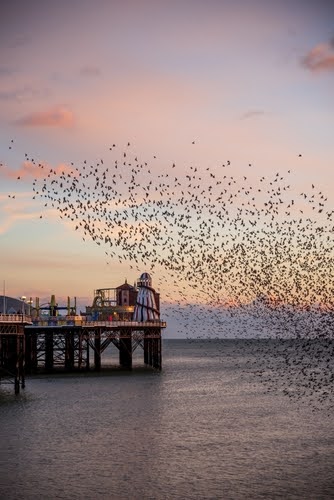
- Highly synchronized flock movement — 'murmurations'
- Return to the same roost sites for decades
European Starling — Regional Nesting Activity
Select your region to see when this species courts, nests, and fledges young. Use it to time exclusion, inspection, and permitted mitigation work.
OH, IN, IL, MI, WI, MN, IA, MO, KS, NE, ND, SD
Damage & Health Risks
- Massive droppings accumulation under roosts — structural and sanitation risk
- Contamination of livestock feed with Salmonella and E. coli
- Damage to fruit crops, vineyards, and dairy operations
- Fire hazard from nest material in signage and vents
- Aviation strike risk at airports
Non-native invasive species. Not protected under the federal Migratory Bird Treaty Act. Control is legal in all 50 states.
Quick Facts
- All ~200 million North American starlings descend from ~100 birds released in NYC's Central Park in 1890.
- Excellent vocal mimics — can imitate other birds, alarms, and even human speech.
- A single winter roost caused a Boeing 737 crash in Boston in 1960, killing 62 people.
- USDA APHIS removes millions of starlings annually to protect agriculture and aviation.
Need a Commercial Bird Control Solution?
Tell us about your facility, bird problem, and project location. Our commercial bird control team can evaluate the situation and help determine an appropriate solution.