Gulls
Large, aggressive rooftop nesters common on flat-roof facilities, food plants, landfills, and coastal industrial sites.
Identification
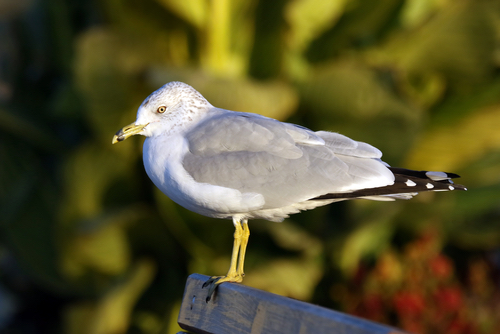
18–25 inches long depending on species. White body with gray wings, yellow bill, and pink or yellow legs. Juveniles are mottled brown for 2–4 years before adult plumage.
Diet
Omnivorous scavengers — fish, refuse, food waste, dumpster contents, small birds, eggs, and dropped food around drive-thrus and loading docks.
Habitat
Flat commercial rooftops, coastal facilities, landfills, transfer stations, food-processing plants, distribution centers, marinas, and parking lots.
Nesting Habits
Flat gravel rooftops, HVAC platforms, parapet corners, and any elevated flat surface with a sight line.
Loose bowl of grass, seaweed, sticks, and debris directly on rooftop membrane or gravel ballast.
2–3 olive-brown eggs with dark blotches
26–32 days
35–45 days to fledge; adults stay aggressive for weeks after
1 brood per year; will re-nest if the first clutch fails
Behavior
- Colonial nesters — a single rooftop can host 10–100+ pairs
- Extremely aggressive during nesting; will dive-bomb workers and customers
- Highly site-loyal — return to the same rooftop for decades
- Long-lived (20+ years), which magnifies the compounding effect of an unaddressed colony
Gulls — Regional Nesting Activity
Select your region to see when this species courts, nests, and fledges young. Use it to time exclusion, inspection, and permitted mitigation work.
OH, IN, IL, MI, WI, MN, IA, MO, KS, NE, ND, SD
Damage & Health Risks
- Blocked and damaged rooftop drains from nest material
- Punctured roofing membrane from claws and debris
- Aggressive attacks on employees and customers during breeding season
- Contamination at food-handling and open-air facilities
- Aviation strike risk near airports and coastal industrial sites
Protected under the federal Migratory Bird Treaty Act. Nest removal, egg oiling, and lethal control require federal (USFWS) and, in most cases, state depredation permits.
Quick Facts
- Ring-billed and herring gulls have shifted from coastal to inland nesting on commercial rooftops over the last 40 years.
- Rooftop gull colonies expand ~15% per year if left unmanaged.
- Because gulls are federally protected, a permitted, integrated program (netting, wire, egg oiling) is required — DIY control is illegal.
- A single gull can produce over 1 lb of droppings per week.
Need a Commercial Bird Control Solution?
Tell us about your facility, bird problem, and project location. Our commercial bird control team can evaluate the situation and help determine an appropriate solution.