
Rock Pigeon
The most common commercial pest bird in North America — rooftops, ledges, parapets, and signage.
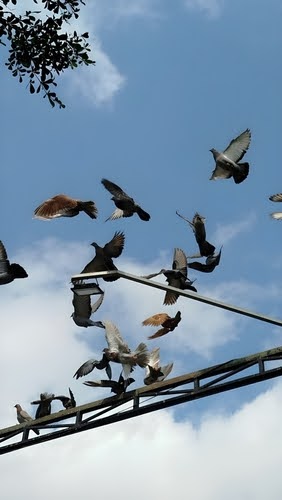
Identification
13 inches long with a stout body, short neck, and small head. Feral coloration ranges from blue-gray with two dark wing bars to nearly all-white, checkered, or rust-red. Distinctive iridescent green and purple neck sheen.
Diet
Grains, seeds, bread, discarded human food, and food waste around loading docks, dumpsters, and grain-handling facilities.
Habitat
Urban and industrial structures — rooftops, ledges, parapets, warehouse rafters, signage, bridges, grain elevators, and any flat or sheltered horizontal surface.
Nesting Habits
Sheltered ledges, I-beams, HVAC equipment, signage cavities, parapet walls, and inside open warehouse structures.
Flimsy platform of twigs, straw, wire, and debris — reused and built up with droppings over successive broods.
1–2 white eggs per clutch
17–19 days
25–32 days to fledge; young stay near the nest for another 1–2 weeks
3–6 broods per year in commercial settings — year-round in the South and in heated buildings
Behavior
- Highly site-loyal — return to the same nest and roost sites for years
- Live in flocks of 20–500+ birds around commercial food or grain sources
- Prefer flat, wide surfaces at least 3 inches deep for roosting
- Extremely tolerant of humans, noise, and machinery
Rock Pigeon — Regional Nesting Activity
Select your region to see when this species courts, nests, and fledges young. Use it to time exclusion, inspection, and permitted mitigation work.
OH, IN, IL, MI, WI, MN, IA, MO, KS, NE, ND, SD
Damage & Health Risks
- Acidic droppings that corrode paint, concrete, steel, and roofing membranes
- Nesting debris that clogs gutters, drains, and rooftop equipment
- Slip hazards on walkways, stairs, and fire escapes
- Contamination risk in food processing, warehousing, and retail environments
- Transmission of histoplasmosis, cryptococcosis, and E. coli
Not protected under the federal Migratory Bird Treaty Act. Control is legal in all 50 states, subject to local ordinances.
Quick Facts
- Pigeons can produce up to 25 lbs of droppings per bird per year.
- Feral pigeons descend from domesticated rock doves brought to North America in the 1600s.
- They can drink by suction — one of the few birds that doesn't need to tip its head back.
- Homing pigeons can navigate more than 1,000 miles back to their roost.
Need a Commercial Bird Control Solution?
Tell us about your facility, bird problem, and project location. Our commercial bird control team can evaluate the situation and help determine an appropriate solution.