
Swallows
Migratory mud-nesters that plaster colonies of nests on eaves, overhangs, canopies, and bridges — federally protected.
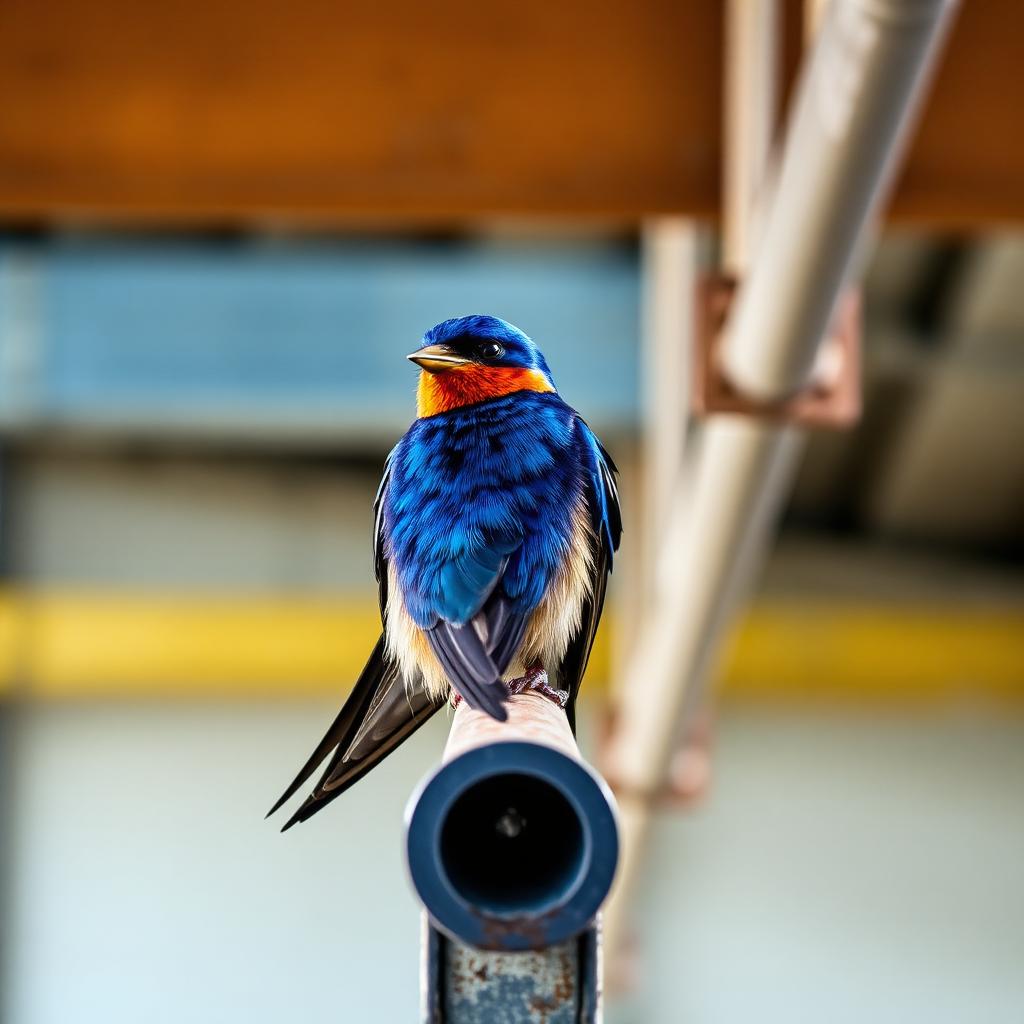
Identification
Barn Swallows: 6–7 inches, deeply forked tail, glossy steel-blue back, rusty throat and underparts. Cliff Swallows: 5–6 inches, square tail, buff rump patch, pale forehead, and dark throat. Both are agile aerial insectivores seen coursing low over parking lots and open bays.
Diet
Flying insects — mosquitoes, flies, midges, beetles — caught almost exclusively on the wing during daylight.
Habitat
Loading docks, canopies, warehouse eaves, bridges, culverts, parking garages, and any vertical wall with a horizontal overhang. Cliff swallows form dense colonies; barn swallows nest singly or in loose groups.
Nesting Habits
Barn swallows: open cup on a ledge, rafter, or light fixture under an overhang. Cliff swallows: enclosed gourd-shaped mud nests plastered to vertical walls just beneath an overhang, often in colonies of dozens to hundreds.
Pellets of mud mixed with grass, lined with feathers. A single nest can require 1,000+ mud trips to build.
3–5 white eggs with brown spotting
13–17 days
18–24 days to fledge; parents continue feeding for another 1–2 weeks
1–2 broods per year
Behavior
- Highly colonial (especially cliff swallows) — nests are built shoulder-to-shoulder
- Strong site fidelity — return to the same building year after year
- Migratory: winter in Central and South America, arrive in the U.S. March–May
- Aggressive dive-bombing behavior when nests are approached
Swallows — Regional Nesting Activity
Select your region to see when this species courts, nests, and fledges young. Use it to time exclusion, inspection, and permitted mitigation work.
OH, IN, IL, MI, WI, MN, IA, MO, KS, NE, ND, SD
Damage & Health Risks
- Mud nests stain and damage stucco, EIFS, painted steel, and signage
- Droppings accumulate on walkways, loading docks, and parked vehicles below nests
- Contamination of food-processing and warehouse doorways with feces and nest debris
- Ectoparasites (swallow bugs, mites, fleas) migrate from active nests into buildings
Federally protected under the Migratory Bird Treaty Act. Active nests (containing eggs or young) cannot be disturbed. Exclusion netting and nest deterrents must be installed before nest construction begins or after young have fully fledged; removal of an active nest requires a USFWS depredation permit.
Quick Facts
- A cliff swallow colony can exceed 3,700 nests on a single bridge or building.
- One swallow eats an estimated 850 insects per day during breeding season.
- Barn swallows are one of the few North American species to breed on every continent except Antarctica.
- The pre-construction window (before mud is placed) is the only reliable time for lawful exclusion.
Need a Commercial Bird Control Solution?
Tell us about your facility, bird problem, and project location. Our commercial bird control team can evaluate the situation and help determine an appropriate solution.