
Woodpeckers
Cavity-excavating birds that damage siding, insulation, fascia, and rooftop equipment while drumming for territory.
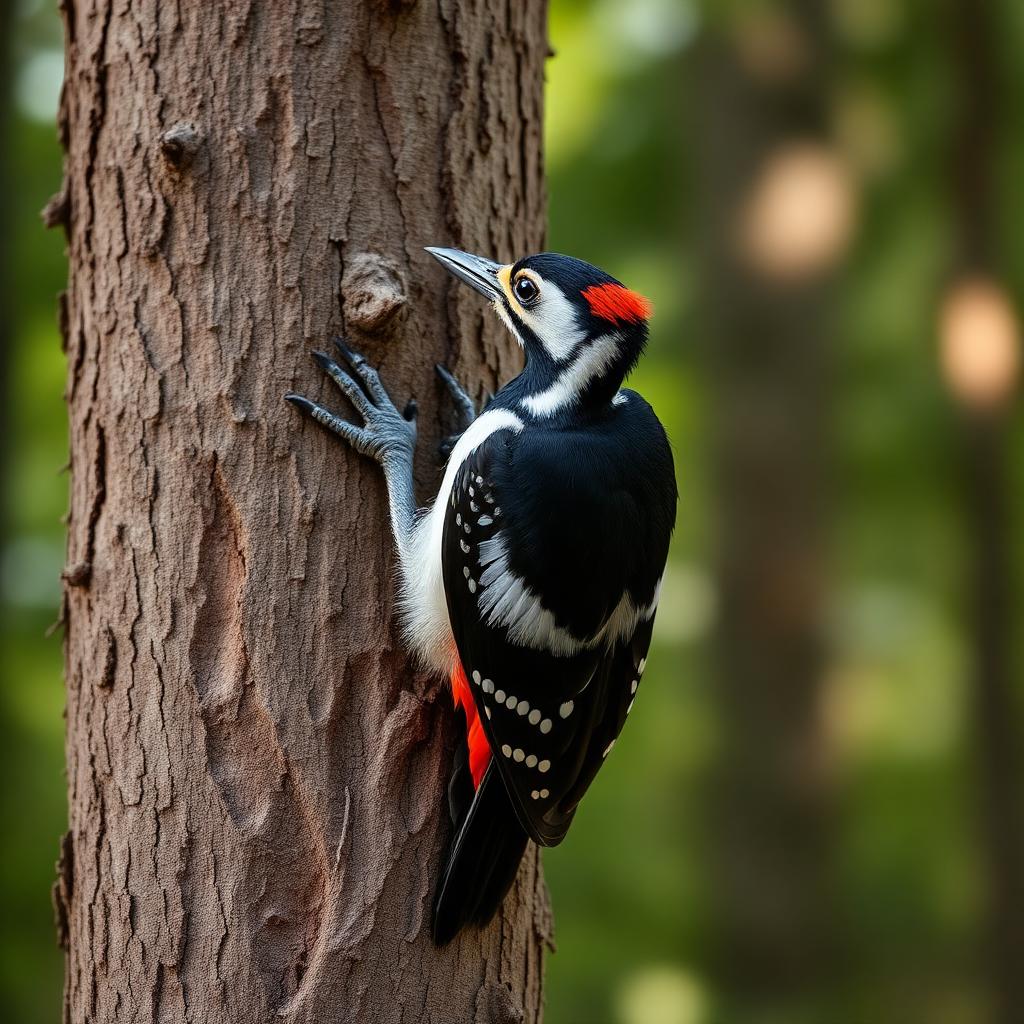
Identification
Ranges from 6-inch downy woodpeckers to 19-inch pileated woodpeckers. Stiff tail feathers, chisel-like bill, and undulating flight pattern. Most species show bold black-and-white patterning with red crown patches.
Diet
Insects (especially wood-boring beetles and ants), tree sap, fruit, nuts, and suet.
Habitat
Wooded commercial campuses, warehouses with wood or synthetic-clad exteriors, cell towers, utility poles, and any resonant vertical surface.
Nesting Habits
Excavated cavities in dead wood, siding, fascia boards, wood trim, and even foam-clad exterior insulation.
None — cavities are lined only with wood chips left from excavation.
3–6 white eggs
11–14 days
24–31 days to fledge
1 brood per year in most northern regions; 2 broods in southern regions
Behavior
- Drumming (rapid pecking on resonant surfaces) is territorial, not feeding — peaks in early spring
- Highly territorial around a chosen structure; a single bird may return daily for weeks
- Excavate multiple exploratory holes before selecting a final cavity
- Attracted to cedar, redwood, stucco-over-foam, and metal flashing that resonates
Woodpeckers — Regional Nesting Activity
Select your region to see when this species courts, nests, and fledges young. Use it to time exclusion, inspection, and permitted mitigation work.
OH, IN, IL, MI, WI, MN, IA, MO, KS, NE, ND, SD
Damage & Health Risks
- Golf-ball to softball-sized holes in siding and fascia
- Water intrusion behind damaged cladding
- Drumming damage on satellite dishes, gutters, HVAC housings, and cell equipment
- Repeat annual damage if the underlying attractant (insects, resonance) is not addressed
Protected under the federal Migratory Bird Treaty Act. Lethal control requires a USFWS depredation permit. Exclusion, deterrents, and habitat modification are the legal front-line tools.
Quick Facts
- A woodpecker's skull is engineered to absorb impacts of up to 1,200 g-forces without brain damage.
- Northern flickers cause the majority of siding damage on commercial buildings in the Midwest and East.
- All North American woodpeckers are federally protected — DIY lethal control is a federal violation.
- Reflective deterrents work only when installed BEFORE a bird claims a territory.
Need a Commercial Bird Control Solution?
Tell us about your facility, bird problem, and project location. Our commercial bird control team can evaluate the situation and help determine an appropriate solution.